
Atomic Ecology Meets — Dr. Brian Hayden?

Earlier this year, I got a lovely invitation from Simon Johnston to head over to Edinburgh and give the keynote at the Freshwater Biological Association's annual scientific meeting. The topic? Stable isotopes — what I've been doing with them, what you can do with them, and (gently) what you should be doing with them. It went well enough that I recorded a version at home to share. Here's the short version.
A word that started at dinner
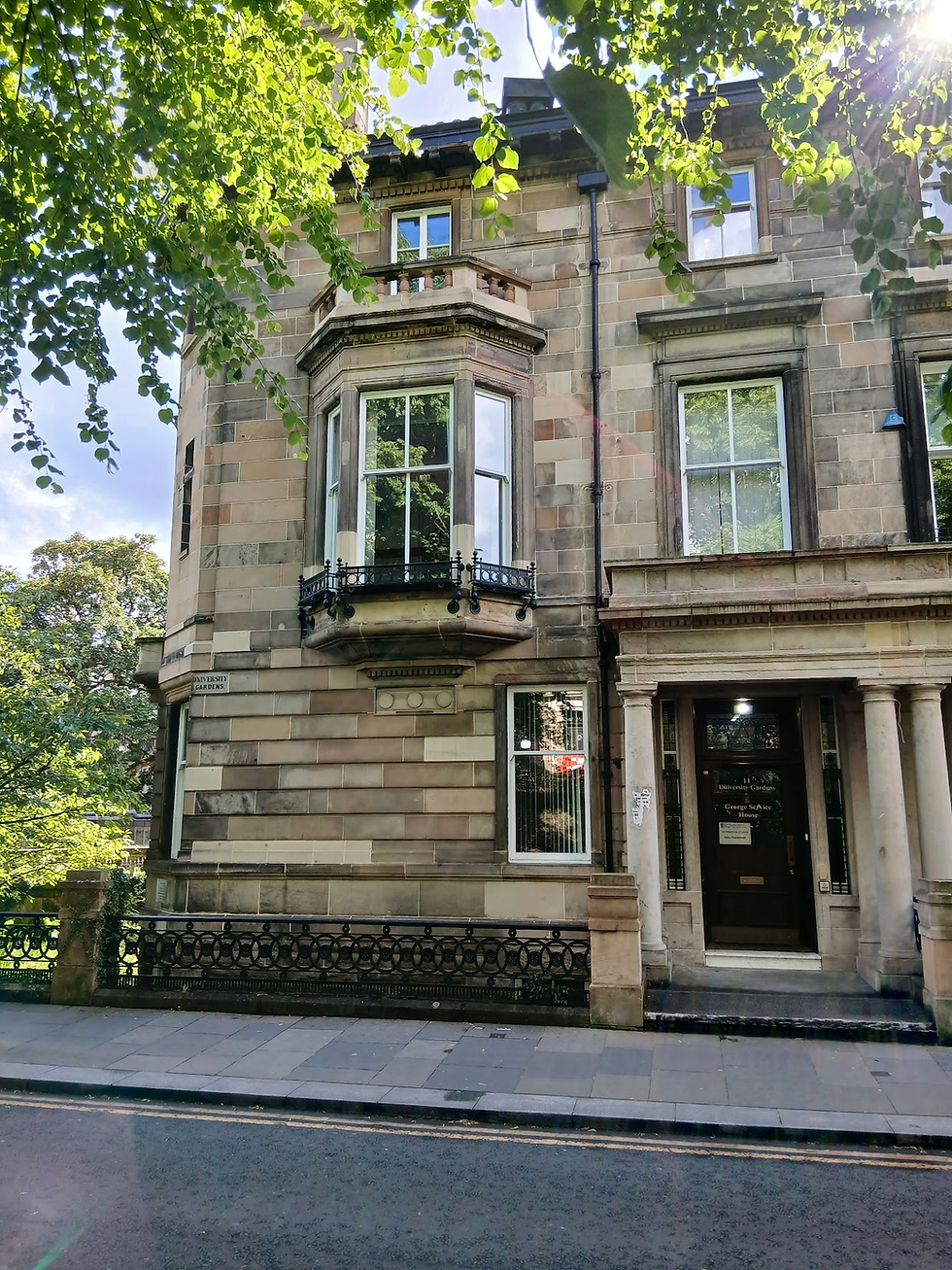
Our story begins, like all good ones, on a sunny day, in the leafy suburbs of Glasgow, where I went hunting for a plaque near a spot called Isotope Lane. It commemorates a dinner party from over a century ago, where Frederick Soddy and his friend Margaret Todd were chewing over the odd chemical properties of Soddy's work. One of them coined the word isotope right there at the table. Before that, we didn't have the word at all. Soddy went on to a Nobel Prize; I went on my merry way with a photo.

So what are they? Take carbon. Carbon-12 has six protons and six neutrons; carbon-13 sneaks in one extra neutron. Same bonds, same chemistry, just a touch heavier. That tiny difference does two useful things: we can measure the ratio precisely in a mass spectrometer, and because heavier isotopes form slightly stronger bonds, isotopes get subtly sorted as they move through biological and physical processes. Which means they quietly record what's been happening.
Reading a lake without getting wet
Point that idea at a lake and it gets fun. Plot carbon against nitrogen and a food web appears: phytoplankton and zooplankton on one side, leaf litter and benthic critters on the other, trout and pike stitched across the middle, migrating salmon flagged by their marine diet. Sample a bit of everything, run it through the mass spec, and you can read who eats whom — no scuba required.
My own work has chased this from Irish rivers to Finnish Lapland — 30 lakes across a 500 km gradient with Kimmo Kahilainen — to the rivers of New Brunswick, where seasonal pulses of autumn leaf litter light up the isotope data year after year (the small-stream ecologists were right, take a bow). Same tool, wildly different postcodes, same kinds of questions answered.
If a lightbulb went off
That's the pitch, really: anything you can get a sample of, we can do this with — dams in or out, pollution sources, food-web shifts. If reading this flicked a switch, drop me an email. I run online courses on the theory and the analysis, and there's an FBA isotope course coming this autumn. Let's make something happen.
Comments